Services · OSINT
OSINT due diligence for partners, executives and sensitive transactions
Some decisions have lasting consequences: an acquisition, a partnership, a new investor, a critical supplier. Due diligence intelligence gathers and cross-references, from open sources, the information relevant to your decision: reputation, conflicts of interest, public financial or legal signals. BEAROPS delivers a documented and cautious analysis, stating clearly what has been verified and what has not. It applies the method of the OSINT assessment to a specific decision.
- Open sources only
- Controlled legal framework
- Confidential findings
- In French or English
When should you use due diligence intelligence?
| Decision | What the analysis brings |
|---|---|
| Acquisition or merger (M&A) | Shed light on reputation, conflicts of interest and public signals before committing |
| New partner or critical supplier | Check that public information is consistent before signing a contract |
| A new investor or shareholder | Understand the ecosystem and the interests at stake |
| Recruitment to a sensitive position | Confirm, from open sources, the consistency of a high-profile candidate’s background |
A legal framework defined before any engagement
Where does the information come from?
Official registers and legal notices, press and trade publications, public company data, accessible digital footprint. Every source is lawful and traceable. We exclude any data obtained through intrusion, impersonation or unfair means: information that can be neither sourced nor verified does not enter the analysis.
Cross-reference, verify, qualify
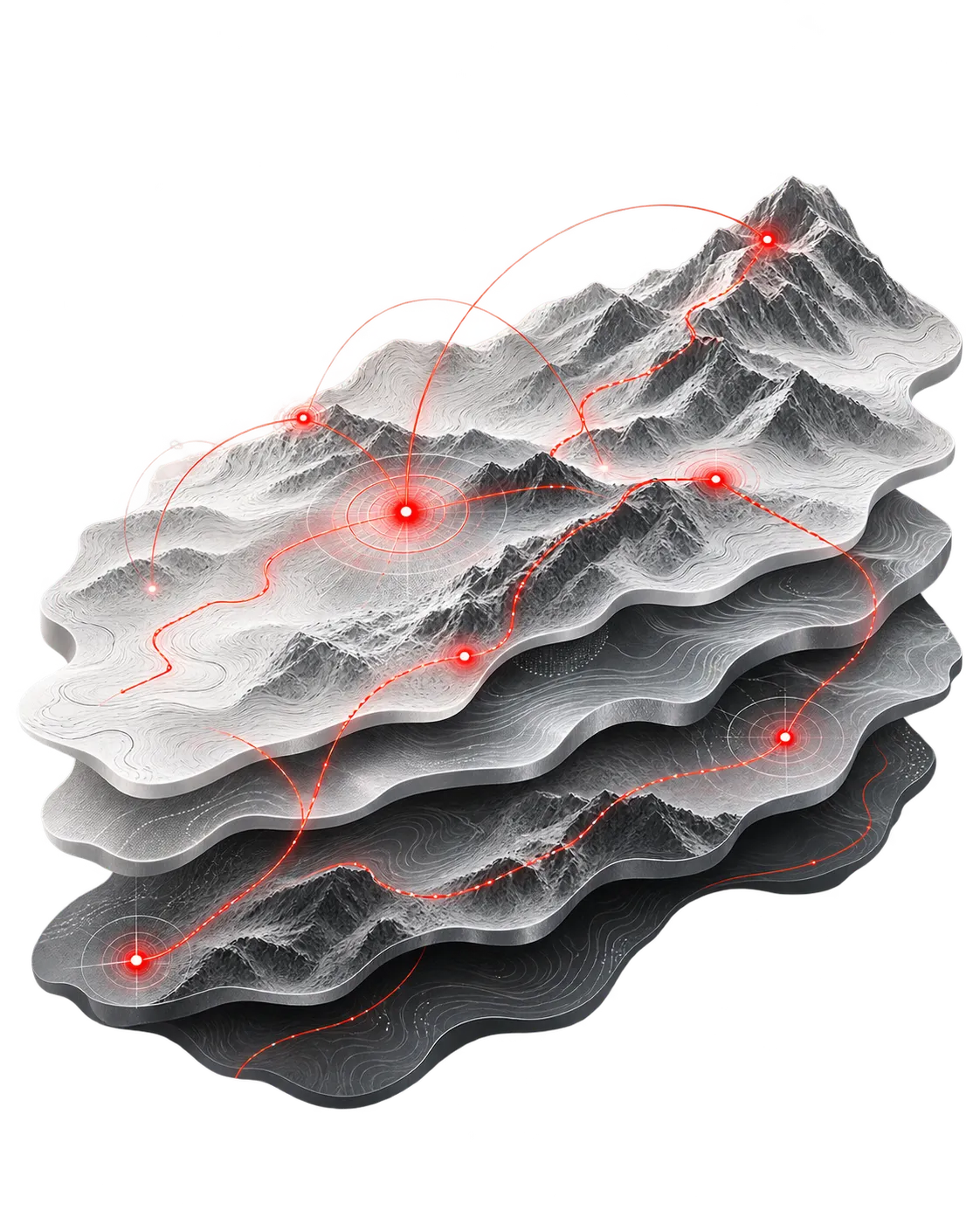
An isolated piece of information is worthless until it has been corroborated. We cross-reference sources, check that the elements are consistent and qualify their level of reliability. Each conclusion is presented with its degree of certainty: confirmed fact, lead to be confirmed, or hypothesis. Caution takes precedence over assertion.
- Confirmed fact
- Lead to be confirmed
- Hypothesis
What does due diligence intelligence not do?
Due diligence intelligence informs a decision; it does not replace it and does not constitute evidence for legal proceedings. It is limited to open sources: it does not guarantee completeness and passes no final judgement on any person. Its conclusions are elements for assessment, to be integrated into your overall analysis.
To document an incident that has already occurred, whether a leak , an impersonation or a targeted threat, an OSINT incident inquiry is the right service.
What you receive
- A clear, decision-oriented summary, with points of concern.
- The detailed findings, each one sourced and rated for reliability.
- The areas of uncertainty and what would remain to be verified.
- A confidential oral debrief if you wish.
Sources and references
Sources consulted on . Report an error: contact+site@bearops.fr
Frequently asked questions
What does due diligence intelligence involve?
It is an open-source analysis that gathers and cross-references the information relevant to a sensitive decision: an acquisition, a partnership, a critical supplier, a high-profile hire. It gives you documented and qualified elements for assessment, without replacing your decision or constituting evidence for legal proceedings.
Is this service legally governed?
Yes. Gathering information about third parties is subject to a specific legal framework. We define the mandate, the purpose and the legal basis before any engagement, use only open and lawful sources, and check the applicable regulatory framework case by case before committing.
Do you use intrusive methods?
No. We limit ourselves strictly to open and lawful sources. Any information obtained through intrusion, impersonation or unfair means is excluded. Information that can be neither sourced nor verified does not enter the analysis.
Are the conclusions guaranteed?
No, and we say so clearly. The analysis is limited to open sources: it does not guarantee completeness. Each element is presented with its level of reliability, and areas of uncertainty are made explicit. These are elements for assessment, not definitive certainties.
Let’s scope your needs in complete confidence
Describe the decision you need to inform. A BEAROPS analyst will call you back to define the mandate, the legal framework and the scope, in confidence.